

Add Years to the Life of Refrigerated Chambers
Every mechanical system suffers from normal wear and tear. Belts stretch, switches stick, welds crack. Refrigeration equipment is no exception. Every operating cycle consumes a small fraction of a compressor's service life until cumulative wear eventually results in failure. Every component — gaskets, fans, condenser coils, valves, defrost systems, controllers, compressors, etc. — has an estimated lifecycle. But these components don’t operate independently. A failure in one creates stress on others, expediting failures and shortening the lifespan of the entire asset. This blog presents a solution for extending the life of valuable, refrigerated assets enabling facilities to keep chambers running optimally for years longer.
The Hidden Cost of Running on the Edge
Facilities that store and manage high-value, highly regulated products, like pharmaceuticals and biologics, are required to monitor temperatures inside each environmental chamber to ensure integrity. This, combined with calendar-based preventive maintenance and N+1 redundancy, often form the only line of protection facilities use to protect against catastrophic refrigeration failures. But neither approach provides insight into the actual health of the chambers — the very thing that determines how reliable they are.
That blind spot forces maintenance teams into a reactive posture, repairing equipment in response to unexpected failures — usually outside normal business hours, under emergency conditions, when repair costs are at a premium.
A single undetected fault, like a valve that doesn’t fully close or a compressor that is short cycling, forces other components to work harder to compensate, shortening their lifecycle. Left unaddressed, those malfunctions can cascade into the premature failure of essential components.
Calendar-based preventive maintenance practices don’t solve this problem, because parts wear out before their expected lifetime, especially if they are under extra strain. Parts may also function well beyond their anticipated lifetime, so replacing them prematurely doesn’t maximize their value.
Optimizing Chamber Performance
Refrigerated chambers that are maintained for optimal operation last years longer than those that are not. OverShield® by Predictive Monitor® is an advanced predictive analytics solution designed specifically to identify the conditions that precede failures in critical thermal systems. This technology keeps facilities one step ahead of failures through proactive maintenance practices.
Here’s how it works:
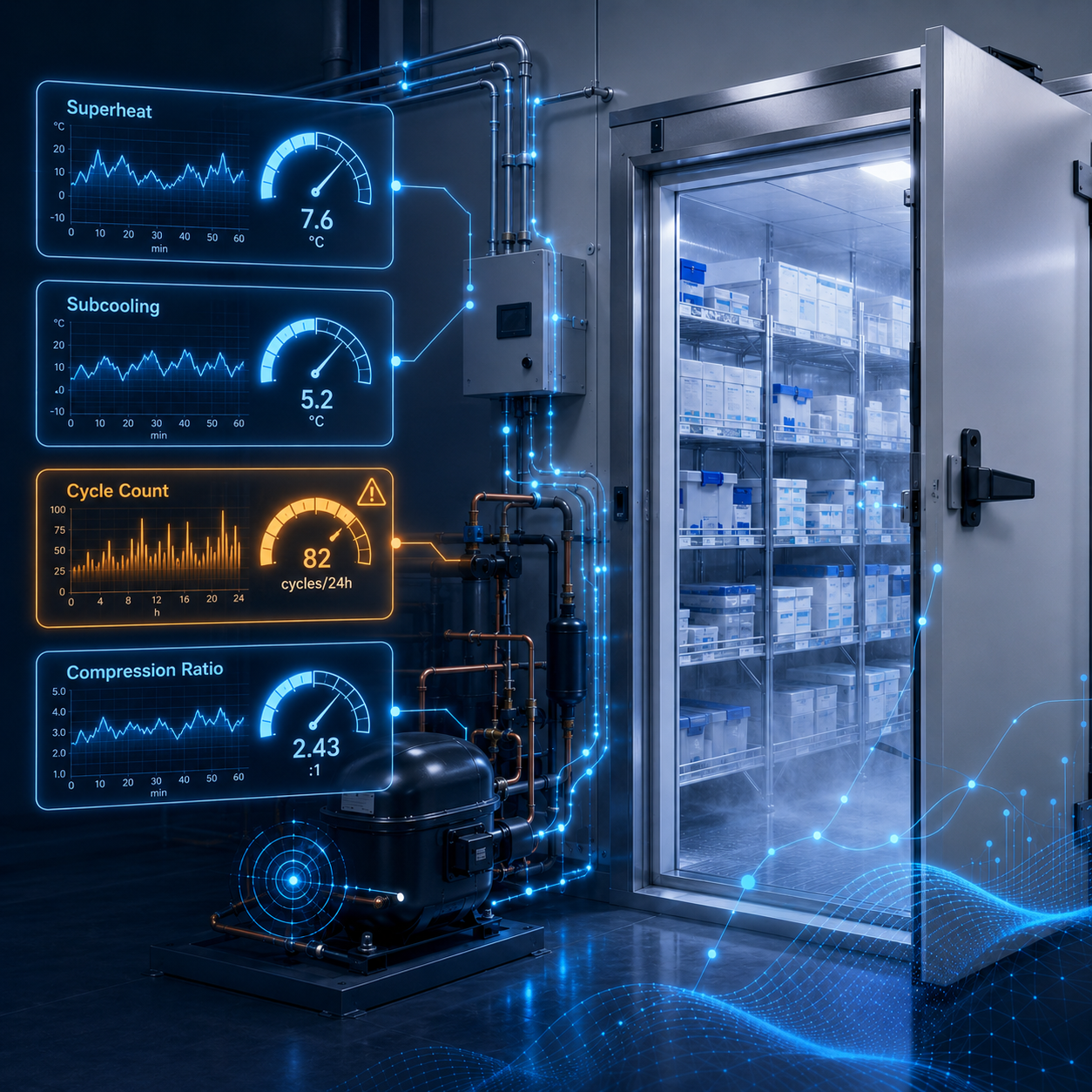
OverShield introduces continuous visibility into the health of refrigeration systems — far beyond just the temperature inside the chamber — to support facility reliability, and maintenance teams. Wireless sensors placed at key points in and around each chamber track temperature, pressure, electrical current, RH and other values around the clock. AI-driven analytics compare that data against thousands of historical patterns to catch the earliest signs of a deviation that could signal a future failure weeks or months down the road.
To ensure optimal chamber conditioning, OverShield generates a detailed weekly report for every chamber and also assigns an overall health score to it. A downward trend in the health score is indicative of a developing problem and evidence that the chamber is not operating as efficiently as it could. When sensors detect an anomaly, it is logged in the weekly detailed report along with specific, actionable guidance that identifies the cause, how severe it is, how to verify it, and how to fix it. This report is in addition to intelligent alerts that go out immediately by text, email, or phone when an anomaly occurs.
This is the difference between a reactive monitoring system and a predictive analytics solution. Monitoring tells you something is already wrong. OverShield tells you something is about to go wrong, giving you time to schedule a simple repair instead of withstanding an emergency situation.
Fewer Breakdowns Mean More Years of Service
Keeping a refrigeration system operating at peak efficiency isn't just about avoiding this week's emergency — it's about protecting the equipment's long-term health. Every failure that OverShield prevents and every bit of unnecessary mechanical stress it avoids adds real time to a chamber's useful life. Facilities using predictive maintenance regularly report equipment lasting five or more years longer than it would under a break-fix approach, deferring major capital expenditures and giving teams the data to make strategic replace-or-repair decisions instead of guessing based on age alone.
In one real-world case, OverShield's sensors detected an overheated hot gas valve in a GMP cold room well before it affected the temperature inside the chamber. The facility's monitoring system stayed silent. OverShield did not. A scheduled repair during normal work hours costing a fraction of an emergency fix prevented a compressor failure that could have put $15 million in lifesaving product at risk.
The Bottom Line
Refrigerated chambers don't fail without warning — they fail without anyone listening to the warning. OverShield gives facilities that ability: continuous insight into equipment health, early warnings before small issues become costly ones, and the data to keep every chamber running the way it was designed to. The result isn't just fewer emergencies — It's more years of reliable service from the assets you already own.
Learn more at www.predictivemonitor.com
See OverShield in Action

Outcomes